Research Article | | Peer-Reviewed

Design of an Intermittent Biosand Filter Amended with Oyster Shell Powders for the Improvement of Household Water Quality in Sub-Saharan Africa and Madagascar

Received: 22 May 2024     Accepted: 11 June 2024     Published: 4 July 2024
Views:       Downloads:
Abstract

Access to safe drinking water and the wide spread of water-borne diseases are major challenges in Sub-Saharan Africa and Madagascar. Based on this, a water purification models has been developed which can use on a local scale. It consists of an intermittent biosand filter amended with oyster shell powders designed from local materials. The performance of the filter was evaluated through physicochemical and bacteriological analyses using standardized methods on raw polluted well water with previously determined initial D0 characteristics. The effectiveness of the designed filter was assessed and a filtration operation was carried out over a monitoring period of 13 days (D13) prior to 7 days of acclimatization of the system. With a filtration rate of 0.75l/h-1, there is a very strong reduction in turbidity from 35.59NTU to 0 NTU and in BOD5 from 125mg/l to 2mg/l. More so, bacteriological analyses reveal a progressive and complete decrease from D0 to D13 of fecal coliforms from 9000 CFU/100ml to 0 CFU/100ml; total coliforms from 6,000 CFU/100 ml to 0 CFU/100 ml and fecal streptococci from 10,800 CFU/100 ml to 0 CFU/100 ml. Compared to the classic ceramic filter, no significant difference in the Duncan test is reported for the highlighted parameters. This filter presents potential among other water treatment methods at the local scale for reducing the risks of water-borne diseases and achieving Sustainable Development Goal 6 in developing countries.

Published in American Journal of Environmental Protection (Volume 13, Issue 3)
DOI 10.11648/j.ajep.20241303.12
Page(s) 69-83
Creative Commons

This is an Open Access article, distributed under the terms of the Creative Commons Attribution 4.0 International License (http://creativecommons.org/licenses/by/4.0/), which permits unrestricted use, distribution and reproduction in any medium or format, provided the original work is properly cited.

Copyright

Copyright © The Author(s), 2024. Published by Science Publishing Group

Keywords

Intermittent Biosand Filter, Oyster Shell, Filter Cartridge, Madagascar, Water Purification, Sub-Saharan Africa

1. Introduction
Access to a regular supply of safe water is defined as a fundamental human right by the United Nations Committee on Economic, Social and Cultural Rights and constitutes the 6th Sustainable Development Goals SDG6 . Over the past decades, the quality of freshwater resources has significantly reduced, with new threats to drinking water safety . Globally, about 5 billion people live in areas threatened by water security . In developing countries, drinking water is a luxury, particularly the poor population in rural and peri-urban areas . According to the United Nations World Water Assessment Program, 80% of people without access to an improved drinking water source live in rural areas. More so, only 27% of the population have acces to safety managed water systems in Sub-Saharan Africa and Madagascar . As a result, the burden linked to water-borne diseases is heavier with more than half a million deaths per year . These diseases can be controlled through adequate access to drinking water, sanitation and improved hygiene, alleviating nearly 10 % of the global burden of disease . Moreover, water treatment methods on a local scale remain rudimentary and not very effective. In the absence of financial means to obtain sophisticated filters to make their water potable, populations in rural and peri-urban areas of sub-Saharan Africa and Madagascar remain at the mercy of diarrheal epidemics, factors of increased morbidity . Faced with the ongoing quest of these populations for effective water treatment technologies on a local scale adapted to their context, slow sand filtration (SSF) stands out as timely . SSFs improve water quality by removing pathogenic microorganisms, turbidity, dissolved organic chemicals, and other associated contaminants . During the slow sand filtration process, a layer of biofilm, made up of microorganisms, measuring several millimeters thick, develops on the surface of a layer of fine sand, commonly called schmutzdecke . The biofilm layer formed after a period of acclimation creates narrower spaces between the interstices, allowing a longer contact time between bacteria and pollutants resulting in their elimination by physicochemical and biological processes . In order to improve the performance of SSF in the elimination of pathogens from drinking water, filters with filter media other than sand or associated components have been reported in a number of works. It Includes iron oxide coated sand silver coated zeolite, sand, fiberglass, anion resin and cation resin . However, these materials are cost-effective and not readily available. According to research conducted by in Cameroon, the combined use of river sand, gravel and charcoal was able to eliminate T. gondii, but without better effects on other pollutants. suggested that charred corncobs would be effective as alternatives to natural gravel in removing turbidity and total coliforms. Based on these, the combination of sand with biocarbonate materials could constitute an excellent support for microbial growth for good biofilm maturity and therefore ensure water treatment efficiency. Biomineral compound, blood clam shells (Anadara granosa) have proven to be good media to combine with sand as a biosand filter effective in reducing microbial contamination . Oyster shells also constitute biominerals which could be used in water treatment. Their high availability in Madagascar would be an asset to capitalize on in the application of water treatment processes on a local scale. Few studies have focused on sand filter media combined with oyster shells, and this process remains to be further explored. Therefore, this study aims to design and test a domestic water treatment device based on an intermittent biosand filter (BSF) amended with oyster shell powders for the supply of drinking water in rural and peri-urban areas. This will improve the accessibility of this precious resource, thereby contributing to the Sustainable Development Goals SDG6.
2. Materials and Methods
2.1. Experimental Setup/Manufacturing of the Bio Sand Filter
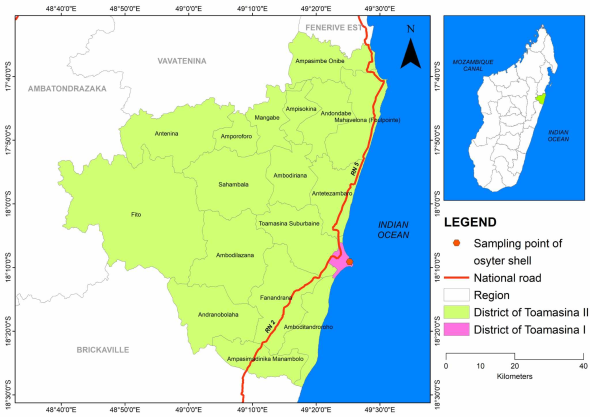
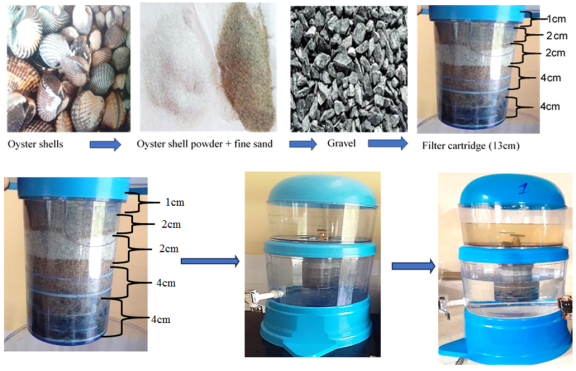
The designed Bio-sand filter contains three cylindrical shaped polyethylene compartments. One located above is the raw water inlet tank (5 liter and 22 cm in diameter) matched in the center with an angle stopcock (15mm*21mm) for flow control, all covered with 'a lid. The other located below is the tank for collecting (10 liters and 23 cm in diameter) the raw water filtered after passing through the filter cartridge; it comes with a stopcock perpendicular to the tank to extract the filtered water. The third cylindrical compartment with 8cm in diameter and 14.5cm in height constitutes the filter cartridge. This compartment is covered with an open diffusion plate of 0.9mm mesh facilitating good distribution of the raw water to be filtered on the filtering media, and limiting modification of its structure. This entire structure rests on a base to facilitate its mobility. The materials of the filter cartridge or filter media, arranged vertically from bottom to top over 13cm, consisted of gravel, coarse sand, fine sand and oyster shell powder (figure 1). These materials were collected locally in rivers at the edge of the beach (shells) in Toamasina in western Madagascar (figure 2). The materials were washed, steamed at 60°C for 48 hours, crushed (shellfish) then sieved using commercial sieves at the Laboratory of the National Environmental Research Center. For filling, the characteristics of the materials were determined by particle size tests. Five layers of different sizes and mesh sizes (figure 1) were placed from bottom to top as follows: a layer of 4 cm of gravel (5–8mm), a layer of 4 cm of coarse sand (1mm), a layer of 2 cm of shell powder (0.8 mm), a layer of 2 cm of fine sand and coarse shell powder (0.4 mm) and a layer of 1 cm of fine sand and shell powder (0.1 mm). The effective size of fine sand (D10) is 0.17, representing the sieve opening through which 10% of the sample passes. The D60/D10 ratio giving the uniformity coefficient (CU) is 2.27, and the porosity is 37%.
Figure 1. Experimental water purification device designed (intermittent biosand filter amended with oyster shell powder).
Figure 2. Geographic location of the filter cartridge material sampling area.
2.2. Operation of the Bio-Filter
The designed biofilter was acclimated for a week as prescribed by CAWST in order to induce the maturation of the biological layer (schmutzedecke). This involved filling the inlet tank daily with raw water and pouring in the filtrate obtained. The raw water retained comes from a sampling of domestic wells near the University Campus of Ankatso-Antananarivo Madagascar, with previously determined bacteriological and physicochemical characteristics. They presented values above the WHO and Malagasy standard for drinking water. The hydraulic conductivity and flow rate were also determined during this phase. After this phase, 60l of raw water were collected in 2 polystyrene drums of 30l each, previously sterilized and stored at 4.8°C in the laboratory just 1 day before the filtration operation. 4l of raw water were brought to room temperature (approximately 24°C) before being injected into the filtration device, intermittently once every day for 13 days. The filtrated sample was collected daily and analyses were performed for physicochemical and bacteriological Characteristic. Filtration time was determined by evaluating the reduction in inlet tank water depth per time using a Stopwatch.
As water flows by gravity through the filter cartridge, physical, biological and chemical processes work to remove contaminants. Sandy environments give rise to an attachment to non-pathogenic aerobic micro-organisms, which metabolize all organic matter and feed on bacteria and viruses from the raw water which enter the filter :
1) Physical process (mechanical filtration, sedimentation and adsorption): suspended matter and impurities whose size is greater than the size of the interstices of the filtering medium are removed from the raw water through the formation of a layer of impurities on the filter media. Likewise, the interstices play the role of small sedimentation basins in which suspended matter is deposited there under the effect of their density and leads to the formation of flocs. Pathogens are adsorbed due to physical attraction and the presence of a gelatinous coating making the treated water free of all pathogens and suspended solids .
2) Biological Process: Particle removal occurs primarily at the top of the filter media bed, in the gelatinous surface layer known as the Schmutzdecke or biofilm layer . This biofilm is formed under the effect of the disintegration of dissolved organic matter in the presence of water and molecular oxygen from the first days or even weeks of filter operation, on and within 0.5 to 2 of the filter media . The efficiency of eliminating microorganisms depends on the degree of maturity of the biofilm which contains suspended matter, bacteria, algae, fungi, protozoa and small vital cells . Most pathogens from raw water are consumed by microorganisms in this layer following various processes such as predation, natural death, inactivation, bio-antagonism and metabolic mineralization .
3) Chemical process: During filtration, organic matter and particles are broken down into chemical compounds. When these impurities with opposite electrical charges react with each other, it results in charge neutralization which gives rise to a new chemical substance. Therefore, by principle of ionization, the impurities present in the raw water and the filter medium acquire an equal and opposite charge and therefore neutralize each other, which improves the chemical characteristics of the raw water, and hence those of the filtrate obtained .
2.3. Physico-Chemical and Bacteriological Analysis
Some parameters indicating the good quality of drinking water were evaluated throughout the experiment at the microbiology Laboratory of the National Environmental Research Center (CNRE) of Madagascar. The physicochemical parameters, namely turbidity, pH, temperature and electrical conductivity (EC) were determined using a microprocessor multi-parameter (Consort C535), and the BOD5 was determined using of a BOD meter by the respirometry method. For the bacteriological parameters, the aim was to isolate and count fecal coliforms, total coliforms and fecal streptococci according to standard ISO 9308-1 and ISO7899-2 . The isolation of the bacteria was carried out by the filtration technique on 0.45 µm membranes incorporated in 90 mm diameter glass petri dishes containing the TTC (TriphenylTerazolium Chloride) culture media for Fecal Coliforms and Fecal Streptococci, and SBM (Slanetz Bartley Medium) for total coliforms. Indeed, 51.5 g of TTC agar and 41.5 g of SBM agar were homogenized with 1 liter of distilled water then slowly heated until complete dissolution using a magnetic stirrer, and sterilized in an autoclave for 15 min at 120°C for tax included. The solutions obtained once cooled were poured into the petri dishes then left to solidify under the host for 20 min. The number of colony forming units (CFU) is expressed in CFU/100 ml of water according to the following formula. To facilitate enumeration, 2 serial dilutions were carried out for each sample. Then the filter membrane was placed using sterile forceps on top of the funnel of a filtration device with electric pumps where 100ml of samples were filtered. When the funnel became empty, the membrane was carefully collected using sterilized forceps and placed on the reverse side in the previously poured Petri dish which was then incubated in the incubator. Incubation of inverted Petri dishes was carried out at a temperature of 37°C for 48 hours for fecal coliforms and fecal streptococci, and 44°C for 24 hours for total coliforms. After this time, the colonies obtained are dark pink (total coliforms) and olive green (fecal coliforms and fecal streptococci) in color. The number of colonies was calculated using the method given by the Hach manual given in equation (1).
CFU/ml=number of colonie ×dillution factorsvolume of culture plate(1)
The removal performance of the biological sand filter parameters was evaluated using the removal percentage calculated based on equation (2).
% Removal=100- final parameterInitial parameter×100(2)
2.4. Statistical Analysis
Raw data was organized using Excel Professional software for descriptive analysis and then transported into SPSS v. 16 (IBM, United States) to identify relationships between physicochemical and bacteriological parameters, as well as an ANOVA test with a significance level of p < 0.05. Duncan's post hoc analysis was used to determine the statistical significance of the data.
3. Results and Discussion
3.1. Characteristic of Raw Water
The initial raw water used for the filtration operation has physicochemical and bacteriological characteristics well above the quality standard set by the WHO (2017) for drinking water. Apart from pH, electrical conductivity (EC) and temperature, all other parameters highlighted were above the norm (Table 1). Enterococcal bacteria present very high values, 10800 CFU/100ml for fecal streptococci, 9000 CFU/100ml for fecal coliforms and 6000 CFU/100ml for total coliforms. These characteristics reveal possible anthropogenic contamination of the raw water source, thus making it unsuitable for human consumption and requiring prior treatment. Two other important indicators for assessing water quality are turbidity and BDO5. Turbidity mainly refers to the presence of suspended matter including mineral particles, organic debris and microorganisms. The high value of the turbidity of the raw water thus indicates the strong presence of suspended matter whose decomposition involves bacteria likely to be pathogenic for humans. The high BOD5 value is a good indicator of the content of biodegradable organic matter in water causing turbidity . It reveals the presence in raw water of microorganisms (bacteria) which oxidize biodegradable organic matter by consuming oxygen .
Table 1. Raw Water Characteristics.

Parameter

Raw data

Standard values (WHO, 2017)

Use for Drinking

pH

7.73

6.5-8.5

Yes

Turbidity (NTU)

30.59

5

No

EC (µs/cm)

319

500

Yes

Temperature (°C)

24.5

< 25

Yes

BDO 5 (mg/l)

120

3

No

Fecal Coliforms (CFU/100ml)

9000

0

No

Total Coliforms (CFU/100ml)

6000

0

No

Fecal Streptococci (CFU/100ml)

10800

0

No

3.2. Performance of the Designed Bio-Sand Filter
3.2.1. Reduction of Physico-Chemical Parameters
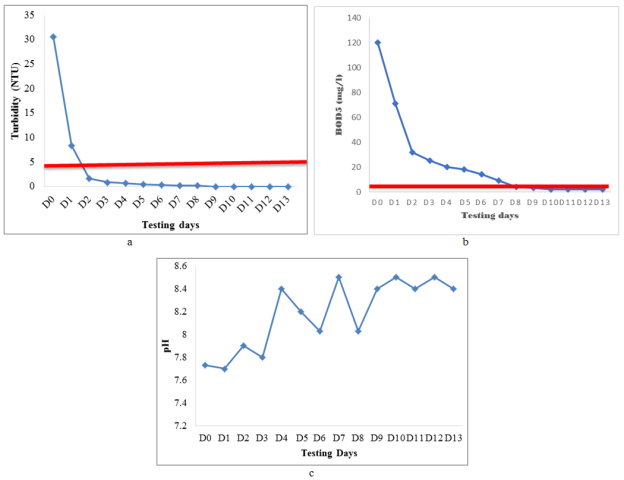
During filtration, the evolution of physicochemical parameters above the recommended standard for drinking water were assessed. These parameters include Turbidity, BOD5 and pH, essential in the evaluation of water quality. The parameters (Turbidity, BOD5) show a decreasing trend following the measurement periods (Days). Depending on the values of the raw water (D0), the turbidity ranges from 30.59NTU on day 0 (raw water) to 0 NTU on the 13th day (figure 3a). The total reduction (0 NTU) is also observed from the 9th day. BOD5 values range from 120mg/l (D0) to 2mg/l (D13). The BOD5 reaches the recommended threshold value from the 8th day (figure 3b). The pH values fluctuate very little, ranging from 7.7 to 8.4 (figure 3c).
The reduction in turbidity and BOD5 observed in the final filtrate compared to the initial raw water resulted in a significant removal efficiency of the order of 100% and 98.3% respectively (Table 2). These results are significantly higher than those documented for biosand filters and slow sand filters (table 4). This demonstrates the ability of the designed filter to remove organic and inorganic particles from water thereby improving its quality as mentioned in the previous works . The reduction in turbidity as a function of time (days of measurement) could be s a result of a progressive formation of a gelatinous coating above the filter media. This facilitates the flocculation and sedimentation of dissolved and undissolved particles present in the water. raw making the water very turbid as reported by . Likewise, the formation of the gelatinous layer is linked to the tightening of the pores of the very fine interstices of the filter media with D 10 = 0.17. In agreement with Lamon et al the reduction in DB05 is due to depletion of dissolved oxygen in the water relating to the respiration of microorganisms in their metabolic activities and the chemical action of the particles present on the filter media. This trend reflects the gradual growth of biofilms in the upper layer, which may explain the gradual improvement in turbidity removal efficiency and BOD5 . This is affirmed by the very strong positive correlation (R = 0.94; P < 0.01) between these two parameters. The alkalinity pH value (8.4) of the final filtrate could be attributed to the nature of the materials of the filter media, in this case the composition of the oyster shells. This result agrees with those of Fitriani et al that obtained pH values ranging from 7.0 to 8.55 with blood clam shells and sand as filter media. This could be an asset to the designed filter because of the importance of alkaline water for human health . The filter did not affect the temperature (table 2). However, temperature plays an important role in the performance of sand filters as reported by Unger and Collins . Indeed, hot biological columns (24°C) generally contribute to satisfactory biochemical oxidation of organic matter by microbes in the biological layer . Thus, the efficiency of slow sand filtration could be reduced due to temperature disturbances.
Figure 3. Evolution of Turbidity (a), DB05 (b) and pH (c) water quality indicators during the filtration test.
3.2.2. Bacterial Parameters Removal
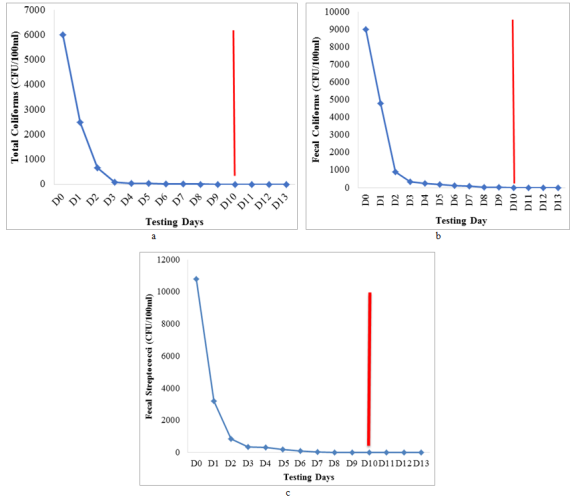
The effectiveness of the designed filter was also assessed on its ability to eliminate certain pathogenic germs (groups of bacteria) indicators of water quality. The number of colonies of the groups of bacteria highlighted, namely fecal coliforms, total coliforms and fecal streptococci, has considerably decreased after each filtration step compared to the raw water (D0). The colony number values range from 6000 to 0 CFU/100ml for total coliforms, from 9000 to 0 CFU/100ml for fecal coliforms and from 10800 to 0CFU/100ml for fecal streptococci. This was recorded between the 1st (D 0) and the last day (D13) of analysis (figure 4). A total reduction in the number of colonies is noted from the 10th day for all groups of bacteria.
Figure 4. Reduction of water quality indicator bacteria groups during filtration test.
At the end of the experiment, the elimination rate was 100% for each of the groups of bacteria highlighted (table 2). This satisfactory result is superior to those of previous works . Bacterial elimination is due to a combination of bacterivorous processes . This suggests a ripening effect caused by the maturation of a biofilm present on the filter media . Indeed, during the filtration process, following the successive trapping and disintegration of particles, soluble suspended materials (organic and inorganic), a biofilm (biological layer) is formed. This layer named Schmutzdecke provided with microorganisms (bacteria, fungi, algae, helminths and protozoa) consume the bacteria (coliforms and streptococci) present in raw water following processes of metabolic predation, inactivation, bio-antagonism and mineralization . The chemical and biological composition of the biofilm depends on the characteristics of the raw water incorporated and the nature of the substrate/filtering media (sand, sand + oyster shell) which, coupled with the duration of water-substrate contact, interfere with its maturity . Although not the subject of this study, the microbiological composition of Schmutzdecke in biological sand filters and slow sand filters has been reported in previous work . According to Lubarsky et al , the algae present in the Schmutzdecke synthesize carbohydrates which are mainly responsible for the elasticity and the most resistant and adherent viscosity. These microscopic algae produce polyunsaturated aldehydes or antibacterial toxins with powerful bactericidal effects . Protozoa, for their part, eliminate bacteria present in raw water through interception and predation . In addition, the almost stable water temperature during the process and < 25°C (table 2) would have constituted an environment hostile to the survival of the bacteria identified. Indeed, as reported by Ranjan et al , intestinal bacteria accustomed to human body temperature (37°C) do not thrive with temperatures < 30°C.
The results obtained are similar to those of previous work carried out on the effectiveness of microbial elimination of a biosand filter Moreover, the bacteria elimination rate demonstrated (100%) surpasses that documented in previous work (table 4) and affirms the performance of the designed filter cartridge. This high performance could be due to the filter media made up of oyster shell powder and sand known as diatomaceous earth which, based on its constituent cause rapid maturation of the biofilm.
Table 2. Comparison of water quality parameters at the end of the filtration process.

Parameter

Raw water

Filtered water

%Yield

Standard values

Use for Drinking

Ph

7.73

8.4

13.8

6.5-8.5

Yes

Turbidity (NTU)

30.59

0

100

5

Yes

EC (µs/cm)

319

318

0.313

500

Yes

Temperature (°C)

24.5

24.8

1.2

< 25

Yes

BDO 5 (mg/l)

120

2

98.3

3

Yes

Fecal Coliforms (CFU/100ml)

9000

0

100

0

Yes

Total Coliforms (CFU/100ml)

6000

0

100

0

Yes

Fecal Streptococci (CFU/100ml)

10800

0

100

0

Yes

3.2.3. Analysis and Modeling of the Performance of the Designed Filter
Pearson correlation (table 3) was carried out between the physicochemical and bacteriological parameters to analyse the performance of the developed filter during the study. Very strong positive correlations were obtained between the groups of bacteria, in particular between fecal coliforms and total coliforms (r = 0.995, p < 0.1), fecal coliforms and fecal streptococci (r = 0.997, p < 0.1). 0.1) and between total coliforms and fecal streptococci (r = 0.993, p < 0.1). Likewise, a strong correlation is obtained between turbidity and BOD5 (r = 0.940, p < 0.1), and between these two elements and each groups of bacteria respectively. These strong correlations between these parameters point to a common source of the process leading to their elimination and account for the performance of the filter cartridge. This also related to the subsequent reduction of the parameters over time of experimentation with a progressive maturity of the biofilm layer which would have formed above and in the first 2 to 5 cm as reported by Lubarsky et al . In agreement with Ranjan and Manjeet and Elliot et al , the biofilm matures during filtration by retaining dissolved materials and particles by flocculation and sedimentation thereby reducing turbidity. These sedimented materials and particles disintegrate by oxidation, coupled with the metabolism of the microorganisms, leading to a high consumption of dissolved oxygen present, hence the progressive drop in the DB05. Oxygen is used in the metabolism of biodegradable components as well as in the inactivation and consumption of pathogens. Consequently, it resulted to the progressive to total elimination of fecal coliforms, total coliforms and fecal streptococci in raw water .
According to Maiyo et al , pH influences the chemical and biological mechanisms of water. An acidic pH would be suitable for the proliferation of bacteria in water and vice versa. This is demonstrated by the moderate correlation between pH and bacterial groups in this study.
Table 3. Pearson correlation matrix of the physico -chemical parameters and isolated bacteria.

Parameter

fecal colifomrs

Total Coliforms

Fecal Streptococcus

pH

Temperature

Turbidity

EC

TDS

BOD5

fecal colifomrs

1

Total Coliforms

0.995 **

1

Fecal Streptococcus

0.977 **

0.993 **

1

pH

-0.648 *

-0.617 *

-0.580 *

1

Temperature

0.260

0.251

0.234

-0.071

1

Turbidity

0.971 **

0.989 **

0.999 **

-0.565 *

0.238

1

EC

0.199

0.134

0.041

-0.380

-0.039

0.020

1

TDS

-0.025

-0.080

-0.175

0.007

0.181

-0.190

0.55 **

1

BOD5

0.977 **

0.967 **

0.949 **

-0.740 **

0.186

0.940 **

0.243

-0.75

1

**The correlation is significant at the 0.01 level (two-sided).
*The correlation is significant at the 0.05 level (two-sided).
3.3. Comparative Analysis with Previous Work
Several authors have looked at the effectiveness of water treatment systems on a local scale based on different models of filters made from accessible and low-cost local materials. Generally including sand as the main material, sometimes with amendments. These filters operate under the principle of physical, biological and chemical mechanisms, the essential part of which lies in the development of a gelatinous layer or biofilm called Schulmedecke above and in the first two cm of the filter media . As reported by Maiyo et al , Lubarsky et al , Webster and Fierer , Elliot et al and Jenkins et al , the effectiveness of the filters depends on the maturation of the biofilm which itself is a function, among other things, of its composition (quantity and quality of microorganisms) and environmental conditions (size and type of substrate, hydraulic load, type of raw water incorporated and residence time).
The results of this study are satisfactory compared to other research on the performance of sand filters (Table 4). With sand filter media adjusted to oyster shell powders, a removal performance of 100% FC, 100% TC, 100% and 98.8% BOD5 was obtained. In terms of turbidity elimination, filters using sand as filter media are more efficient (97% elimination) than those using biochar. Kaetzl et al used biochar as an alternative filter media and achieved only 31.1% turbidity removal in wastewater. Webster and Fierer report that the nature of water source influences the types of microbial communities that grow in the biosand filter resulting in its performance, and obtained 85 and 96% CT removal for water river and wastewater respectively. In the elimination of microorganisms, Nasser et al ; and Kabir et al emphasize that the importance of acclimation time in the maturation of the biofilm guarantees better efficiency with results between 95% and 99% for TC, FC and E. Coli. Although important, the thickness of the filter cartridge appears not to be the main characteristic of the effectiveness of biosand filters. The proof is that our cartridge only has a total thickness of 13cm. Similarly, with 32cm thickness, obtained a 96% TC removal not very different from 95% obtained by Nasser et al with 90cm thickness. Furthermore, the system monitoring time does not have a major influence on the filter efficiency. Indeed, despite its 133 days of monitoring the system, was only able to obtain an elimination of 71% of TC and 79% of FC compared to the designed system which was only monitored for 13 days with a significant reduction from the 10th day (figure 2). Based on this analysis, the nature of the filter media would be the main characteristic element of the effectiveness of slow sand filters. The size of the filter media also plays a major role as demonstrated by Maiyo et al ; Ranjan and Manjeet . In terms of coliform elimination, Nasser et al showed that a filter with the thickest fine sand layer achieves maximum treatment efficiency. This is due to its ability to remove solid particles and pathogenic organisms smaller than the pore space between sand grains. In the case of this research, the filter media was made of sand and fine shell powder with a thickness of D10 = 0.1mm. The addition of oyster shell powder played a major role thanks to the tighter gaps between the particles in the medium, which lead to better retention of turbidity particles in the filter. In addition, as a biomineral or bicarbonate material, the development of microorganisms constituting the biofilm is easier and faster than on simple sandy materials. Likewise, the conchiolin it contains is provided with oxygen essential to the biochemical processes which take place within the filter media, leading to the reduction of microorganisms during filtration.
Table 4. Comparison with previous studies.

Type of filter

Filter layer thickness (cm)

Nature of the filter media

Type of treated water

speed of filtration

System monitoring time (days)

Elements deleted

Reference

Intermittent Bio sand filter

13

Sand and oyster shells

Contaminated well water

0.75l/h

13 +7 acclimatization

turbidity 100%, BOD5 98.8%; FC 100%, TC 100% and SF 100%

This research

Intermittent ceramic filter

13

activated carbon; silica sand; zeolite; mineral sand

Contaminated well water

1l/h

13 +7 acclimatization

turbidity 100%, BOD5 97.8%; FC 100%, TC 100% and SF 100%

This research

Intermittent slow sand filter

90

Sand and clam shells

Domestic wastewater

0.05m/s

10 + 14 acclimatization

Turbidity 45.9%, Ammonia 16.7% and Phosphate 19.4%

3]

Intermittent slow sand filter

90

sand

Domestic wastewater

2l/h

30+ 15 acclimatization

TC99%

5]

Slow sand filter

75

Biochar

Sewing

70

Total Phosphorus 91.8%, Turbidity 31.1%, Ammonia 7.1%

1]

Slow sand filter

sand

Rainwater

70

Turbidity 99% and Ammonia 95%

6]

Slow sand filter

60

Sand

Sewing

0.09l/h

133

FC 79%; TC71%

0]

Slow sand filter

32

Sand

Sewing

0.15l/h

28

FC 87%; CT 96%

4]

Intermittent Bio sand filter

33

Smaand

pond water

2.5l/h

25+ 21 acclimatization

turbidity 99.4%, FC 98.3%, TC 98.5%

2]

Intermittent slow sand filter

63

Sand

River water

2l/h

48

turbidity 95%, E.Coli 96.3%, TC 93%

7]

Slow sand filter

90

Sand

River water

2l/h

30+ 20 acclimatization

turbidity 98%, E.Coli 97%, TC 95%

35]

Intermittent Bio sand filter

36

Sand

Sewage and River water

50ml/h

60 + 30 acclimatization

TC 96%

8]

3.4. Contribution to Achieving SDG6: Perspective of Use of the Filter and Recommendation
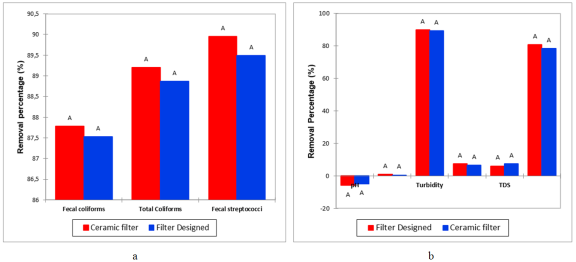
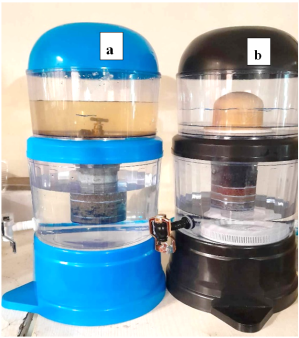
From a practical point of view, the designed filter must be able to meet the expectations of the targets, namely rural and peri-urban populations in developing countries. This is to respond to the major and urgent need for access to quality water for a large segment of the disadvantaged population. This contributes to the achievement of objective 30 of SDG6, the provision of an efficient, accessible process. and practice of water purification on a local. To this end, another assessment of the effectiveness of the filter designed in relation to the ceramic filter model found locally on the market (figure 6) was made. The ceramic filter was subjected to the same experimental conditions as the designed filter with the difference being the composition of the filter cartridge (table 4). According to the Duncan test, significant difference (P<0.005) was obtained with all the physicochemical and bacteriological parameters highlighted (figure 5). Based on on the results obtained, the designed filter has the same capabilities as the filter sold on the market and would therefore be an alternative for the targets. This process promotes a practical home drinking water treatment system with locally available and inexpensive materials. This helps reduce the risks of contamination and recontamination of water between sources and the point of consumption. It has also been shown that improving the quality of drinking water leads to a reduction in epidemiological risks linked to water in low-income countries with the corollary of improving public health .
Figure 5. Comparison of bacteria group removal and physicochemical parameters between the designed filter and the ceramic filter. The similarity of the letters (AA) above the graphs indicates no significant differences for the same parameter. Please replace the letter HAS in the figure with AA for insignificant.
Figure 6. View of the designed filter (Intermittent Bio sand filter) in (a) and the control filter (ceramic filter) locally found on the market in (b).
The designed intermittent biosand filter could thus be substituted for the ceramic filter with the advantage of lower cost due to the availability of filter cartridge materials for disadvantaged populations in developing countries. For use, the filter cartridge must be acclimated for 10 days by feeding the system with raw water to promote its maturation. However, additional research must be done with a view to detecting the microorganisms present in this particular type of filter media (sand + oyster shell) and the duration of use of the system in order to further improve its performance for satisfaction. optimal user experience.
4. Conclusion
Due to limited access to safe drinking was water in developing countries, populations tend available are rushing to accessible water resources to meet their needs, the quality of which remains questionable and subjected to an increase in water-borne diseases. These predominantly poor populations remain dependent on traditional methods of drinking water treatment because the acquisition of a sophisticated water filter is a luxury. This study examined the applicability of a biosand filter amended with locally available oyster shell powders for the supply of drinking water and promoting the health of populations in rural and peri-urban areas of sub-Saharan Africa and Madagascar. Designed according to the model of the ceramic filter locally available on the market, the filter gave satisfactory performance in terms of elimination of fecal coliforms (100%), total coliforms (100%), fecal streptococci, DB05 (98.8%) and turbidity (100%) from polluted well water. The treated water meets WHO drinking water standards and the filter had no significant difference in performance compared to the ceramic filter. Compared to other experimental sand filters, the designed filter was found to be more efficient with shorter operation time and filter cartridge size. Notwithstanding this appreciable performance, for better use of this filter, it still remains to identify the microorganisms in the filter media (sand + oyster shell powder) responsible for improving the efficiency of the filter, and to elucidate their operating principle. and the duration of use of the system.
Abbreviations

BSF

Bio Sand Filter

CNRE

Centre National de Recherche Sur l’Environnement

FC

Fecal Coliforms

SSF

Slow Sand Filter

TC

Total Coliforms

Acknowledgments
We thank the team of the food microbiology laboratory of the National Center for Environmental Research (CNRE-Madagascar) for hosting and conducting the experiments.
Author Contributions
Eboa Mbonjo Franck Cloreil: Conceptualization, Data curation, Formal Analysis, Investigation, Software, Writing – original draft
Ravelonandro Pierre Hervé: Funding acquisition, Methodology, Project administration, Resources, Supervision, Validation
Ngo Boum-Nkot Suzane: Data curation, Visualization, Writing – review & editing
Ebonji Seth Rodrigue: Data curation, Investigation, Software, Writing – original draft
Andrianaivoravelona Fiahavanana Rajaona: Formal Analysis, Investigation, Methodology, Software
Tchoumbougnang François: Project administration, Supervision, Validation, Visualization, Writing – review & editing
Funding
This work is supported by the commission of European Union through the AFRIDI Mobility Grants.
Data Availability Statement
The data supporting the outcome of this research work has been reported in this manuscript.
Conflicts of Interest
The authors declare no conflicts of interest.
Supplementary Material

Below is the link to the supplementary material:

Supplementary Material 1

Supplementary Material 2

References
[1] Agrawal, A., Sharma, N. and Sharma, P. 2020 Designing an economical slow sand filter for households to improve water quality parameters. Mater. Today Proc. 2021, 43, 1582–1586.
[2] Ahammed, M. and Davra, K. 2011. Performance evaluation of a biosand filter modified with iron oxide coated sand for domestic drinking water treatment. Desalination 276(13), 287293.
[3] Bai, Y., Liu, R., Liang, J., Qu, J. 2013. Integrated metagenomic and physiochemical analyzes to evaluate the potential role of microbes in the sand filter of a drinking water treatment system. PLoS ONE 2013, 8, e61011.
[4] Budin, K., Subramaniam, Y., Tair, R., Mohd, S. and Ali 2014. The ability of crab and cockle shell to adsorb lead and chromium from industrial effluent, IOSR J. Environ. Sci. Toxicol. Food Technol. 8 4–6,
[5] Buzuni, B. 1995. Intermittently operated slow sand filtration: a new water treatment process. Civil Engineering, University of Calgary.
[6] Cairncross S., Hunt, C., Boisson, S., Bostoen, K., Curtis, V., Fung, H., 2010. “Water, sanitation and hygiene for the prevention of diarrhea”, International Journal of Epidemiology, vol. 39, pp. 193-205.
[7] CAWST, 2012. Bio-Sand Filtration Construction Manual”, Center for Affordable Water and Sanitation Technology, Calgary, Canada, available http: 2012. at:
[8] Clasen T., Roberts, I., Rabie, T., Schmidt, W. and Cairncross, S. 2006. “Interventions to improve water quality for preventing diarrhea ”, Cochrane Database of Systematic Reviews, Issue 3
[9] Delgado- Gardea, M., Tamez-guerra, P., Gomez- flores, R., Garfio -Aguirre, M., Rocha-Gutiérrez, B., Romo- Sáenz, C., Serna, F., Vega, G., Sánchez-Ramírez, B. and González-Horta, M. 2019. Streptophyta and Acetic Acid Bacteria Succession Promoted by Brass in Slow Sand Filter System Schmutzdeckes. Sci. Rep. 2019, 9, 7021.
[10] Elbana, M., Ramírez de Cartagena, F. and Puig- Bargu, J. 2012 Effectiveness of sand media filters for removing turbidity and recovering dissolved oxygen from a reclaimed effluent used for micro irrigation, Agric. Water Management. 111(2012) 2733,
[11] Elliott, M., Digiano, F. and Sobsey, M. 2011 Virus attenuation by microbial mechanisms during the idle time of a household slow sand filter. Water Res. 2011, 45, 4092–4102.
[12] Elliott, M., Stauber, C., Koksal, F., Digiano, F. and Sobsey, M. 2008. Reductions of E. coli, echovirus type 12 and bacteriophages in an intermittently operated household-scale slow sand filter. Water Res. 2008, 42, 2662–2670.
[13] Fitriani, N., Theresia, L., Tjahja, T., O'Marga, N., Kurniawan, B., Supriyanto, A., Sheikh Abdullah, R. and Rietveld, L. 2023. Performance of a modified and intermittently operated slow sand filter with two different mediums in removing turbidity, ammonia, and phosphate with varying acclimatization.periods.
[14] Fitriani, N., Wahyudianto, F., Salsabila, N., Mohamed, R. and Kurniawan, B. 2023 Performance of modified slow sand filter to reduce turbidity, total suspended solids, and iron in river water as water treatment in disaster areas, J. Ecol. Eng. 24 1–18,
[15] Fogel, D., Isaac-Renton, J., Guasparini, R., Moorehead, W., Ongerth, J. 1993 Removing giardia and cryptosporidium by slow sand filtration. J. Am. Water Work. Assoc. 1993, 85, 77–84.
[16] Freitas, B., Terin, U., Fava, N., Maciel, P., Garcia, L., Medeiros, R., Oliveira, M., Fernandez- Ibañez, P., Byrne, J. and Sabogal -Paz, L. 2022 Critical Overview of Household Slow Sand Filters for Water Treatment. Water Res. 2022, 208, 117870.
[17] Freitas, B., Terin, U., Fava, N., Sabogal -Paz, L. 2021 Filter media depth and its effect on the efficiency of Household Slow Sand Filter in Continuous Flow. J. Approx. Manag, 288, 1–12.
[18] Guchi, E. 2015 Review on Slow Sand Filtration in Removing Microbial Contamination and Particles from Drinking Water. Am. J. Food Nutr., 3, 47–55.
[19] Haig, SJ, Collins, G., Davies, RL, Dorea, CC, Quince, C. 2011 Biological aspects of slow sand filtration: Past, present and future. Water Sci. Technol. Water Supply 2011, 11, 468–472.
[20] Jenkins, M., Tiwari, S. and Darby, J. 2011. Bacterial, viral and turbidity removal by intermittent slow sand filtration for household use in developing countries: Experimental investigation and modeling. Water research, 45(18), 6227-6239.
[21] Kaetzl, K., Lübken, M., Nettmann, E., Krimmler, S. and Wichern, M. 2020 Slow sand filtration of raw wastewater using biochar as an alternative filtration media, Sci. Rep. 10(2020) 1229,
[22] Kabir, E., Kumar, T., Chakraborty and Ghosh, G. 20 16 Biosand Filter (BSF): A simple water treatment device for safe drinking water supply and to promote health in hard-to-reach and risk-prone coastal areas of Bangladesh. American Journal of Environmental Protection. Flight. 5, no. 5, 2016, p. 163168.
[23] Kennedy, T.; Hernandez, E. and Morse, A. 2012. Hydraulic Loading Rate Effect on Removal Rates in a BioSand Filter: A Pilot Study of Three Conditions. Water Air Soil Pollut. 2012, 223, 4527–4537.
[24] Lamon, A., Faria Maciel, P., Campos, J., Corbi, J., Dunlop, P., Fernandez- Ibañez, P., Byrne, J., Sabogal -Paz, L. 2021. Household slow sand filter efficiency with schmutzdecke evaluation by microsensors. Approximately. Technol. 2021, 1, 1–12.
[25] Li, J., Zhou, Q., Campos, LC, 2018. Application of GAC sandwich slow sand filtration to remove pharmaceutical and personal care products. Sci. Approximately. Total. 635, 11821190.
[26] Liu, L., Fu, Y., Wei, Q., Liu, Q., Wu, L., Wu, J. and Huo, W 2019. Applying bio-slow sand filtration for water treatment, Polish J. Environ. Stud. 28(2019) 2243–2251,
[27] Lubarsky, H., Fava, N., Freitas, S., Terin, U., Oliveira, M., Lamon, A., Pichel,, N., Byrne, J., Sabogal -Paz, L. and Fernandez- Ibañez, P. 2022. Biological Layer in Household Slow Sand Filters: Characterization and Evaluation of the Impact on Systems Efficiency. Water 2022, 14, 1078.
[28] Maiyo, J. K., Dasika, S., Jafvert and CT 2023 Slow sand filters for the 21st century: a review. Int. J Approx. Res. Public health.
[29] Matuzahroh, N., Fitriani, N., Ardiyanti, PE, Kuncoro, EP, Budiyanto, WD, Isnadina, D., Wahyudianto, F. and Radin M. 2020. Behavior of schmutzdecke with varied filtration rates of slow sand filter to remove total coliforms. Heliyon, 6, e03736.
[30] Maˇzeikiene, A 2019. Improving small-scale wastewater treatment plant performance by using a filtering tertiary treatment unit, J. Environ. Manag. 232(2019) 336–341,
[31] Medeiros, R., Fava, N., Freitas, B., Sabogal -Paz, L., Hoffmann, M., Davis, J., Fernandez- Ibañez, P. and Byrne, J. 2020 Drinking water treatment by multistage filtration on a household scale: Efficiency and challenges. Water Res. 2020, 178, 115816.
[32] Moideen, S., Md Din, M., Ponraj, M., Mohd, B., Yusof, Ismail, Z., Songip, A. and Chelliapan, S. 2016 Wasted cockle shell (Anadara granosa) as a natural adsorbent for treating polluted river water in the fabricated column model (FCM), Desalin. Water Treat. 57
[33] Mpenyana Monyatsi, L., Mthombeni, N., Onyango, M., Momba, M., 2012. Cost-effective filter materials coated with silver nanoparticles for the removal of pathogenic bacteria in groundwater. Int. J. Approx. Res. Health public 9(1), 244271.
[34] Nakamoto, N., Graham, N., Collins, M. and Gimbel, R. 2014 Progress in Slow Sand and Alternative Biofiltration Process–Further Developments and Applications; IWA Publishing: London, UK.
[35] Nasser Fava, N., Terin, U., Freitas, B., Sabogal -Paz, L., Fernandez-Ibanez, P. and Anthony Byrne, J. 2020 Household slow sand filters in continuous and intermittent flows and their effectiveness in microorganism's removal from river water, Environ. Technol. 43 1583–1592,
[36] NF, 2000. Water quality. Search and enumeration of intestinal enterococci. Part 2: membrane filtration method, ISO 7899-2.
[37] NF, 2000. Water quality. Search and enumeration of Eschericha coli and coliform bacteria. Part 1: membrane filtration method, ISO 9308-1.
[38] Ochieng, G., Otieno, F., Ogada, T., Shitote, S., Menzwa, D., 2004. Performance of multi-stage filtration using different filter media compared to conventional water treatment systems. Water SA 30(3), 361367.
[39] Oh, S., Hammes, F., Liu, W., 2018. Metagenomic characterization of biofilter microbial communities in a large-scale drinking water treatment plant. Water Res. 128, 278285.
[40] Ranjan, P. and Manjeet, P 2018. Schmutzdecke: A Filtration Layer of Slow Sand Filter. Int. J. Curr. Microbiol. App. Sci. ISSN: 23197706 Volume 7 Number 07.
[41] Ranjan, P. 2017 Effect of Multi-Column Sand Filter on the Turbidity and Escherichia Coli Count of Wastewater (M. Tech Thesis under the guidance of Vashisht, AK submitted to College of Agricultural Engineering and Post Harvest Technology (CAU, Imphal) Ranipool, Sikkim).
[42] Ribalet, F., Intertaglia, L., Lebaron, P. and Casotti, R. 2008. Differential effect of three polyunsaturated aldehydes on marine bacterial isolates. Aquat. Toxicol. 2008, 86, 249–255.
[43] Rodell, M., Famiglietti, J., Wiese, D., Reager, J., Beaudoing, H., Landerer, F., Lo, M., 2018. Emerging trends in global freshwater availability. Natural 1.
[44] Selamawit Mulugeta, Helmreich Brigitte, J¨org E. Drewes, Agizew Nigussie, 2020, “ Consequences of fluctuating depth of filter media on coliform removal performance and effluent reuse opportunities of a bio-sand filter in municipal wastewater treatment”, Journal of Environmental Chemical Engineering.
[45] Subari, F., Kamaruzzaman, M., Sheikh Abdullah, S., Hasan, H., Othman, A., Abdullah, S., Hasan, H. and Othman, A. 2018, Simultaneous removal of ammonium and manganese in slow sand biofilter (SSB) by naturally grown bacteria from lake water and its diverse microbial community, J. Environ. Chem. Eng. 6(2018) 6351–6358,
[46] Suzuki, T., Yamate, T., Otsuka, M., Ichimura, S. 2020 Removal of standard plate-count bacteria from low-turbidity surface waters via integrated M. oleifera seed coagulation pretreatment and process two-layer fabric filtration system, J. Water Process Ing. 38(2020), 101648,
[47] UNESCO, 2013 The 3rd United Nations World Water Development Report: “Water in a changing world”, 187p.
[48] Unger, M.; Collins, MR2008 Assessing Escherichia coli removal in the schmutzdecke of slow-rate biofilters. Water Works Ass. 100, 60–73.
[49] Pascal Disa-Disa et al, (2020) Drinking water treatment by multistage slow sand filtrations; Review Journal of Water Science. vol. 27, n° 3, 2014, p. 259-268
[50] Wang, H., Narihiro, T., Straub, AP, Pugh, CR, Tamaki, H., Moor, JF, Bradley, LM, Kamagata, Y., Liu, WT and Nguyen, TH 2014 Bacteriophage Reduction and Microbial Communities in Biosand Filters. Approximately. Sci. Technol. 2014, 48, 6702–6709.
[51] WHO, 2022 State of the world's drinking water: an urgent call to action to accelerate progress toward ensuring safe drinking water for all. Geneva: World Health Organization. License: CC BY-NC-SA 3.0 IGO.
[52] WHO. 2017 Progress on Drinking Water, Sanitation and Hygiene: Update and SDG Baselines; World Health Organization (WHO) and the United Nations Children's Fund: Geneva, Switzerland.
[53] WHO, 2015 Progress on Sanitation and Drinking Water–2015 Update and MDG Assessment; Audaz, AG, Ed.; UNICEF and World Health Organization: Geneva, Switzerland.
[54] WHO/UNICEF, 2017a. Progress on drinking water, sanitation and hygiene, 2017 update and SDG benchmarks. World Health Organization [WHO]/United Nations International Children's Emergency Fund [UNICEF].
[55] WHO/UNICEF, 2017b. Safely Managed Drinking Water Thematic Report on Drinking Water 2017. World Health Organization, Geneva, Switzerland (License: CC BYNC SA 3.0 IGO).
[56] WWAP. 2020. United Nations World Water Development Report 2020: Water and Climate Change; WWAP (United Nations World Water Assessment Programme): Paris, France, 2020.
[57] Weber Shirk, M., Dick, R. 1997. Biological mechanisms in slow sand filters. Jam. Water W. Assoc. 89, 7283.
[58] Webster T and Fierer N. 2019. Microbial dynamics of biosand filters and contributions of the microbial food web to effective treatment of wastewater impacted water sources. Appl Environ Microbiol 85: e 01142-19.
[59] Yongabi, K and Knoll, L. 2015. Slow filtration on biocoagulant sand for the disinfection of Toxoplasma gondii oocysts from the Mezam River in Bamenda, Cameroon. Afr. J. Biotechnology. 14(11), 937943.
[60] Zhao, Y., Wang, Y., Liu, C., Wang, C., Wang, X., Hou, H., Wang, J. and Li, H. 2019 Purification of rainwater collected using slow sand filters with inexpensive materials: bacterial community structure and purifying effect. Total Environmental Science 674(2019) 344–354
Cite This Article
  • APA Style

    Eboa, C. F. M., Ravelonandro, H. P., Ngo, S. B., Ebonji, R. S., Andrianaivoravelona, R. F., et al. (2024). Design of an Intermittent Biosand Filter Amended with Oyster Shell Powders for the Improvement of Household Water Quality in Sub-Saharan Africa and Madagascar. American Journal of Environmental Protection, 13(3), 69-83. https://doi.org/10.11648/j.ajep.20241303.12

    Copy | Download

    ACS Style

    Eboa, C. F. M.; Ravelonandro, H. P.; Ngo, S. B.; Ebonji, R. S.; Andrianaivoravelona, R. F., et al. Design of an Intermittent Biosand Filter Amended with Oyster Shell Powders for the Improvement of Household Water Quality in Sub-Saharan Africa and Madagascar. Am. J. Environ. Prot. 2024, 13(3), 69-83. doi: 10.11648/j.ajep.20241303.12

    Copy | Download

    AMA Style

    Eboa CFM, Ravelonandro HP, Ngo SB, Ebonji RS, Andrianaivoravelona RF, et al. Design of an Intermittent Biosand Filter Amended with Oyster Shell Powders for the Improvement of Household Water Quality in Sub-Saharan Africa and Madagascar. Am J Environ Prot. 2024;13(3):69-83. doi: 10.11648/j.ajep.20241303.12

    Copy | Download

  • @article{10.11648/j.ajep.20241303.12,
      author = {Cloreil Franck Mbonjo Eboa and Hervé Pierre Ravelonandro and Suzanne Boum-Nkot Ngo and Rodrigue Seth Ebonji and Rajaona Fiahavanana Andrianaivoravelona and François Tchoumbougnang},
      title = {Design of an Intermittent Biosand Filter Amended with Oyster Shell Powders for the Improvement of Household Water Quality in Sub-Saharan Africa and Madagascar
    },
      journal = {American Journal of Environmental Protection},
      volume = {13},
      number = {3},
      pages = {69-83},
      doi = {10.11648/j.ajep.20241303.12},
      url = {https://doi.org/10.11648/j.ajep.20241303.12},
      eprint = {https://article.sciencepublishinggroup.com/pdf/10.11648.j.ajep.20241303.12},
      abstract = {Access to safe drinking water and the wide spread of water-borne diseases are major challenges in Sub-Saharan Africa and Madagascar. Based on this, a water purification models has been developed which can use on a local scale. It consists of an intermittent biosand filter amended with oyster shell powders designed from local materials. The performance of the filter was evaluated through physicochemical and bacteriological analyses using standardized methods on raw polluted well water with previously determined initial D0 characteristics. The effectiveness of the designed filter was assessed and a filtration operation was carried out over a monitoring period of 13 days (D13) prior to 7 days of acclimatization of the system. With a filtration rate of 0.75l/h-1, there is a very strong reduction in turbidity from 35.59NTU to 0 NTU and in BOD5 from 125mg/l to 2mg/l. More so, bacteriological analyses reveal a progressive and complete decrease from D0 to D13 of fecal coliforms from 9000 CFU/100ml to 0 CFU/100ml; total coliforms from 6,000 CFU/100 ml to 0 CFU/100 ml and fecal streptococci from 10,800 CFU/100 ml to 0 CFU/100 ml. Compared to the classic ceramic filter, no significant difference in the Duncan test is reported for the highlighted parameters. This filter presents potential among other water treatment methods at the local scale for reducing the risks of water-borne diseases and achieving Sustainable Development Goal 6 in developing countries.
    },
     year = {2024}
    }
    

    Copy | Download

  • TY  - JOUR
    T1  - Design of an Intermittent Biosand Filter Amended with Oyster Shell Powders for the Improvement of Household Water Quality in Sub-Saharan Africa and Madagascar
    
    AU  - Cloreil Franck Mbonjo Eboa
    AU  - Hervé Pierre Ravelonandro
    AU  - Suzanne Boum-Nkot Ngo
    AU  - Rodrigue Seth Ebonji
    AU  - Rajaona Fiahavanana Andrianaivoravelona
    AU  - François Tchoumbougnang
    Y1  - 2024/07/04
    PY  - 2024
    N1  - https://doi.org/10.11648/j.ajep.20241303.12
    DO  - 10.11648/j.ajep.20241303.12
    T2  - American Journal of Environmental Protection
    JF  - American Journal of Environmental Protection
    JO  - American Journal of Environmental Protection
    SP  - 69
    EP  - 83
    PB  - Science Publishing Group
    SN  - 2328-5699
    UR  - https://doi.org/10.11648/j.ajep.20241303.12
    AB  - Access to safe drinking water and the wide spread of water-borne diseases are major challenges in Sub-Saharan Africa and Madagascar. Based on this, a water purification models has been developed which can use on a local scale. It consists of an intermittent biosand filter amended with oyster shell powders designed from local materials. The performance of the filter was evaluated through physicochemical and bacteriological analyses using standardized methods on raw polluted well water with previously determined initial D0 characteristics. The effectiveness of the designed filter was assessed and a filtration operation was carried out over a monitoring period of 13 days (D13) prior to 7 days of acclimatization of the system. With a filtration rate of 0.75l/h-1, there is a very strong reduction in turbidity from 35.59NTU to 0 NTU and in BOD5 from 125mg/l to 2mg/l. More so, bacteriological analyses reveal a progressive and complete decrease from D0 to D13 of fecal coliforms from 9000 CFU/100ml to 0 CFU/100ml; total coliforms from 6,000 CFU/100 ml to 0 CFU/100 ml and fecal streptococci from 10,800 CFU/100 ml to 0 CFU/100 ml. Compared to the classic ceramic filter, no significant difference in the Duncan test is reported for the highlighted parameters. This filter presents potential among other water treatment methods at the local scale for reducing the risks of water-borne diseases and achieving Sustainable Development Goal 6 in developing countries.
    
    VL  - 13
    IS  - 3
    ER  - 

    Copy | Download

Author Information
  • Laboratory of Ecosystems and Fisheries Resources, University of Douala, Douala, Cameroon; Research Unit in Process Engineering and Environmental Engineering, University of Antananarivo, Antananarivo, Madagascar
  • Department of Earth Sciences, University of Douala, Douala, Cameroon

  • Department of Earth Sciences, University of Douala, Douala, Cameroon

  • Laboratory of Ecosystems and Fisheries Resources, University of Douala, Douala, Cameroon

  • Research Unit in Process Engineering and Environmental Engineering, University of Antananarivo, Antananarivo, Madagascar

  • Research Unit in Process Engineering and Environmental Engineering, University of Antananarivo, Antananarivo, Madagascar